


Dehradun: Keeping in view the upcoming monsoon season and the ongoing Char Dham Yatra, the Uttarakhand government has directed the entire disaster management machinery to remain on high alert. Every year during the monsoon, the hill state faces challenges such as heavy rainfall, landslides, flooding, road blockages, and overflowing rivers. With lakhs of pilgrims expected to visit the Char Dham shrines this season, the government is focusing on strengthening preparedness to avoid any major disaster-related incidents.
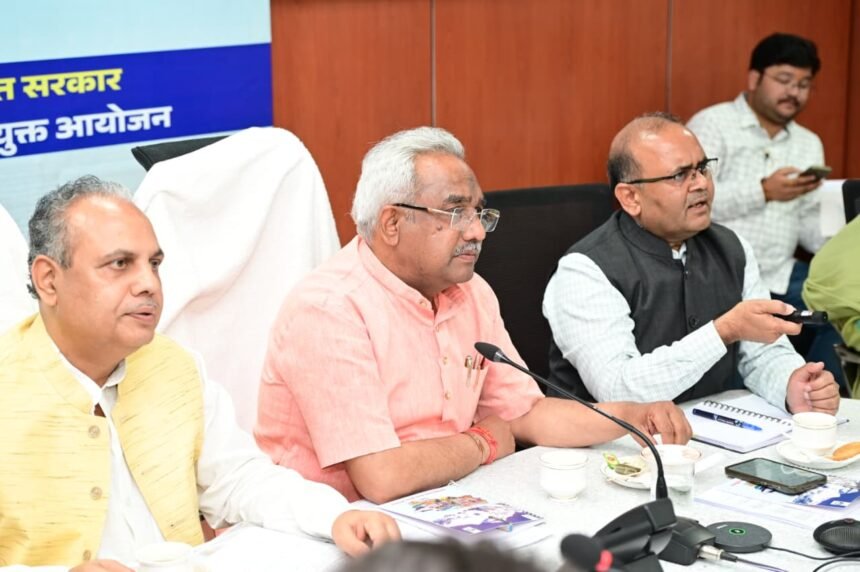
A high-level review meeting was held at the Uttarakhand State Disaster Management Authority (USDMA) under the chairmanship of Disaster Management and Rehabilitation Minister Madan Kaushik. Senior officials from district administrations, police, health services, SDRF, NDRF, and other line departments participated in the meeting and presented detailed reports on monsoon preparedness.
Addressing the officials, Minister Madan Kaushik said that Uttarakhand remains highly sensitive during the monsoon season due to its geographical conditions. He emphasized that while the state is preparing for heavy rains and landslides, the Char Dham pilgrimage is also at its peak, making the situation even more challenging.
The minister instructed all departments, district administrations, police, State Disaster Response Force (SDRF), and National Disaster Response Force (NDRF) to remain on 24×7 alert mode. He stressed that rescue and relief teams must reach disaster-hit locations immediately after receiving information and begin operations without delay.
Highlighting the importance of response time in disaster management, the minister said that timely rescue operations can significantly reduce loss of life and property. He directed departments to strengthen and speed up their response mechanisms.
To tackle urban flooding and waterlogging during the monsoon, the minister ordered a special statewide campaign for cleaning drains and sewer channels. He instructed officials to ensure at least two rounds of cleaning before the onset of heavy rainfall.
The government has also directed authorities to keep all emergency equipment such as high-capacity pumps, motorboats, life jackets, rescue tools, and communication systems fully functional. Special emphasis was laid on the pre-deployment of rescue teams in vulnerable and disaster-prone areas.
Health preparedness was another major focus of the meeting. The minister directed officials to establish temporary medical posts along the Char Dham routes and in disaster-prone regions. He instructed the health department to ensure the availability of doctors, paramedical staff, and essential medicines at all times.
Considering the increased risk of water-borne and infectious diseases during the monsoon, the minister asked health authorities to maintain adequate stocks of medicines and strengthen healthcare services across the state.
The protection of livestock was also discussed during the meeting. The minister directed the animal husbandry department to constitute special Quick Response Teams (QRTs) for the treatment and rescue of animals during disasters. He said livestock plays a vital role in the rural economy and must be protected during emergencies.
Special instructions were also issued regarding the safety of pregnant women during the monsoon. Officials were asked to prepare advance data of women likely to deliver during the rainy season and identify nearby health centres for emergency care in case roads become blocked due to landslides or floods.
With trekking activities increasing rapidly in Uttarakhand, the government also emphasized trekkers’ safety. The minister directed officials to prepare a dedicated trekking policy and a detailed Standard Operating Procedure (SOP) for trekkers. He said complete details of trekkers should be available with the concerned agencies and USDMA, and they should carry GPS and communication devices for quick tracking and rescue during emergencies.
The meeting also reviewed river management measures. The minister said excessive silt deposition in rivers is one of the main reasons behind flooding and waterlogging. He instructed departments to complete dredging and channelization work before the monsoon begins and asked the forest department and other agencies to work in coordination for faster execution.
Senior officials including Vinod Kumar Suman, Riddhim Agrawal, Rajeev Swaroop, and Dr. Shikha Jangpangi attended the meeting and briefed the minister about the preparedness measures being taken across departments.