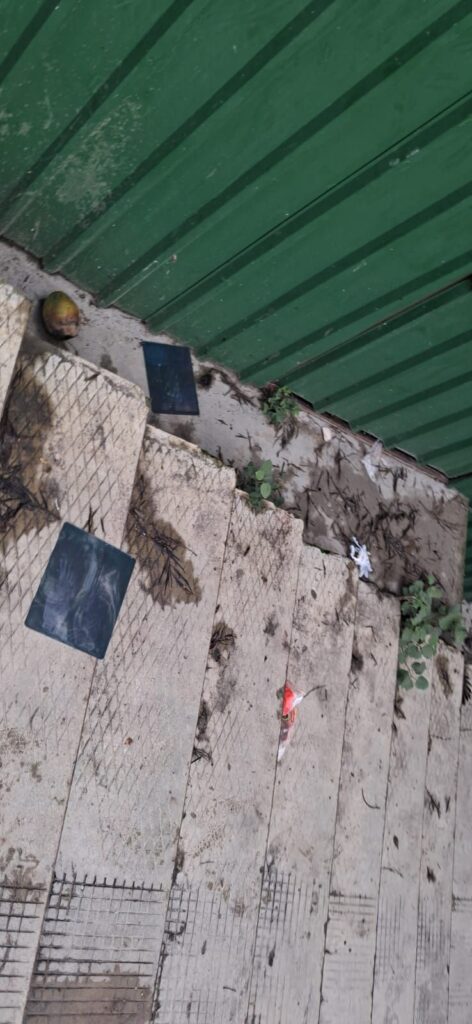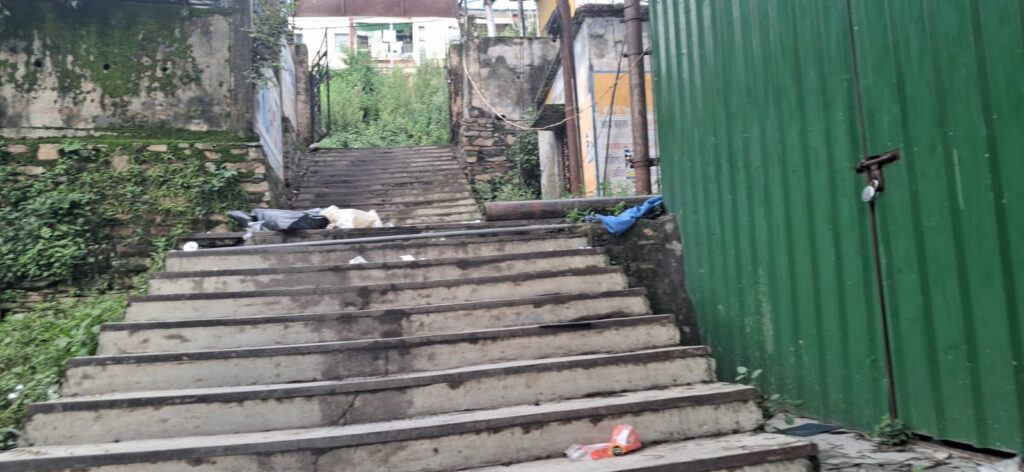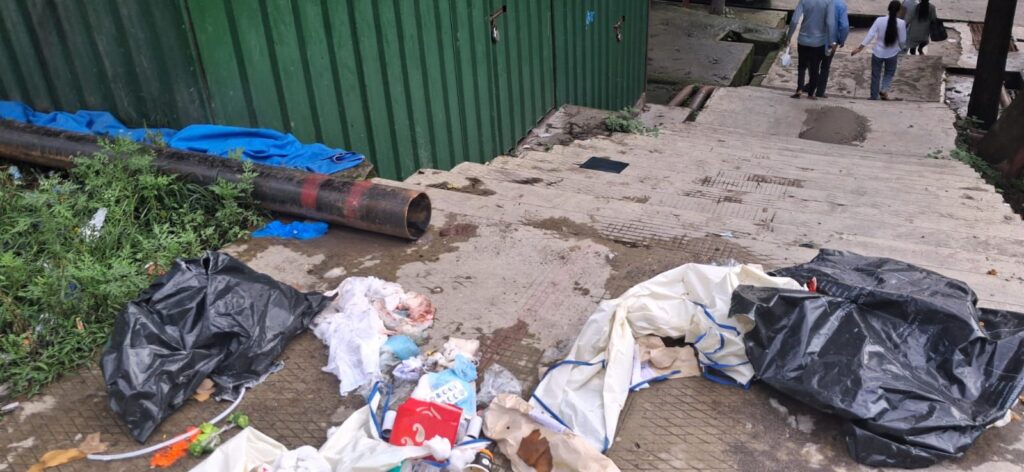



Biomedical waste from MICU, NICU and Blood Bank allegedly dumped into a nearby stream • Rainwater may carry it towards the Kosi River, claim locals • Medical College Principal says, “The matter is not in my knowledge; I will get it examined.”
Almora:
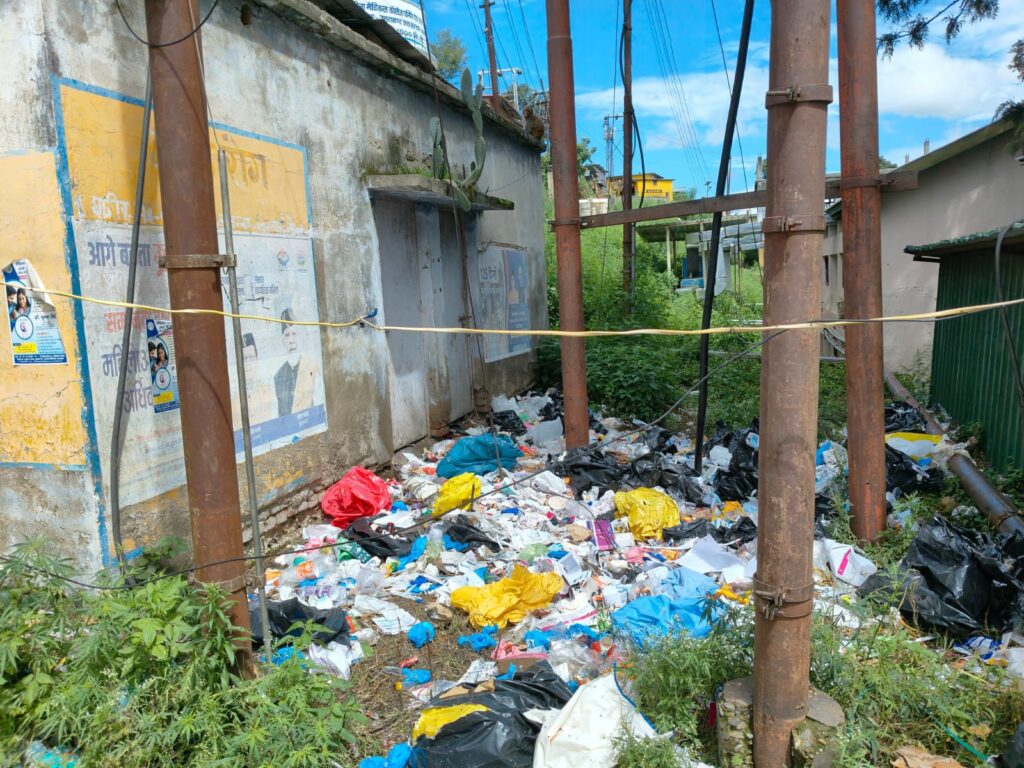
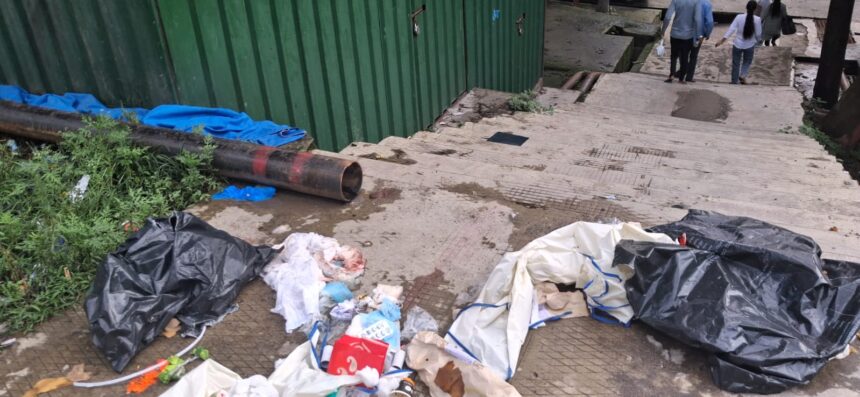
Serious concerns have been raised over the management of biomedical waste at Almora Base Hospital. Allegations suggest that infectious medical waste generated from sensitive units such as the MICU, NICU and Blood Bank is being dumped in a nearby drainage channel instead of being disposed of through the prescribed scientific process.
According to local residents, during the monsoon the drainage flows through the Betaleshwar area and eventually joins the Kosi River, an important water source for Almora. If these allegations are found to be true, the issue could have significant implications for public health, environmental safety and compliance with biomedical waste management laws.
When contacted, Medical College Principal Dr. Chandra Prakash Bhainsora said, “The matter is not in my knowledge. I will have it examined.”
Sources claim that the hospital spends lakhs of rupees every month on biomedical waste disposal through an authorised agency. However, if infectious waste is indeed being discarded in an open drain, it raises serious questions about the implementation and monitoring of the waste management system. Local residents also allege that the disposal contract was awarded long ago, but the ground-level situation appears unsatisfactory.
Biomedical waste includes infectious and hazardous materials generated during patient treatment, surgeries, laboratory testing and immunisation. It consists of blood-soaked dressings, human tissues, contaminated plastic items, needles, syringes, blades, medicine vials and other potentially infectious materials. Improper handling or disposal of such waste can expose people and the environment to harmful pathogens.
Under the Biomedical Waste Management Rules, 2016, healthcare facilities are required to segregate biomedical waste into four colour-coded categories. Human tissues, blood-contaminated materials and expired medicines must be placed in yellow containers; contaminated plastic items in red containers; needles and other sharps in white puncture-proof containers; and glass vials and ampoules in blue containers. The waste must then be transported to an authorised Common Biomedical Waste Treatment Facility (CBWTF) for scientific treatment and disposal.
The rules also state that biomedical waste should not be stored for more than 48 hours within hospital premises. Open dumping or mixing biomedical waste with general garbage is considered a serious violation of the law.
Residents claim that if infectious waste is indeed reaching the drainage channel and eventually the Kosi River, it could pose a risk to water quality and public health. As the river serves as an important water source for nearby areas, any contamination would be a matter of serious concern. However, whether the river has actually been contaminated can only be established through an official investigation and scientific testing.
Environmental experts emphasise that improper biomedical waste management can lead to the spread of infections, soil and water pollution, and hospital-acquired infections. They stress that strict adherence to biomedical waste management regulations is essential to protect both public health and the environment.
The issue also raises several important questions. If substantial payments are being made regularly for biomedical waste disposal, how is the waste allegedly ending up in an open drainage channel? Is the authorised agency collecting the waste as required? Is the hospital administration monitoring the disposal process effectively? If any violations have occurred, who will be held accountable?
Given the seriousness of the allegations, there is a need for a joint inspection by the district administration, the Uttarakhand Pollution Control Board, the Health Department and the Medical College administration to verify the facts. If the allegations are substantiated, appropriate action should be taken against those responsible and corrective measures should be implemented to prevent any recurrence.